

UX Case Study · 2020
Lazarus NaturalsE-Commerce Redesign
Reducing checkout friction, launching a loyalty program, and surfacing the right products to the right users — all measured, all shipped.
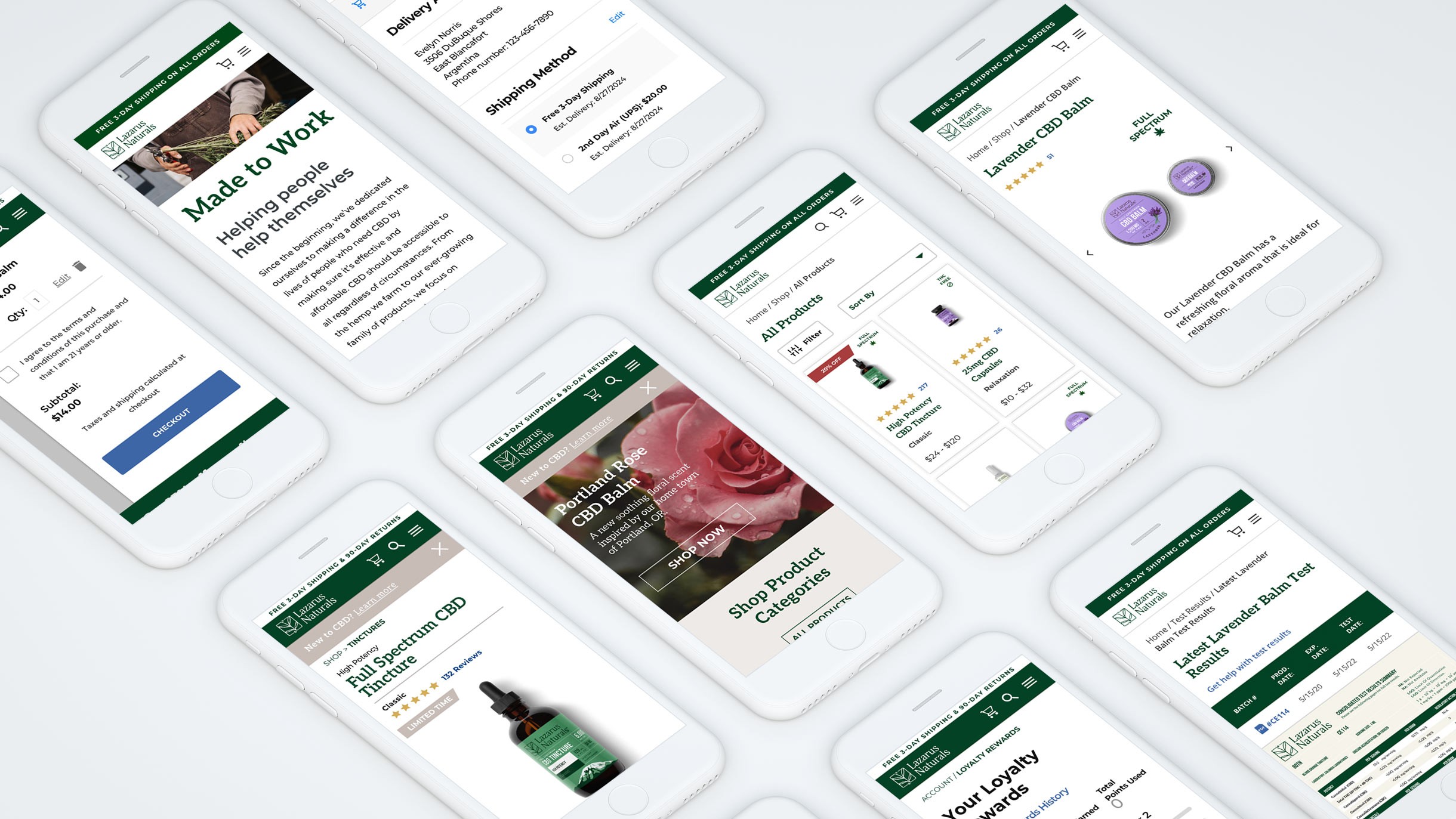
Results
Q4 2020 - Q1 2021
Scheduled tours in 2025 compaired to 22,543 scheduled in 2024
Decrease in drop off rate on card page
Increase in sales of recommended products components
Scheduled tours in 2025 compaired to 22,543 scheduled in 2024
Statistics captured Q4 2020 - Q1 2021
Background
An established brand with real friction in the funnel
Lazarus Naturals had a loyal customer base, a strong mission, and a growing product catalog. What they didn't have was a checkout experience that let customers actually complete purchases — or any mechanism to reward the people who kept coming back.
Google Analytics told the story clearly: cart drop-off was high, there was no loyalty program to retain repeat buyers, and product discovery was underserving customers who didn't already know what they wanted.
Reduce cart drop-off
Launch loyalty rewards
Surface recommended products
Increase product reviews
Three users, three distinct goals
Rather than designing for a single archetype, I identified three user modes that drove meaningfully different behavior on the site. Each persona mapped directly to a feature we prioritized and shipped.
Users
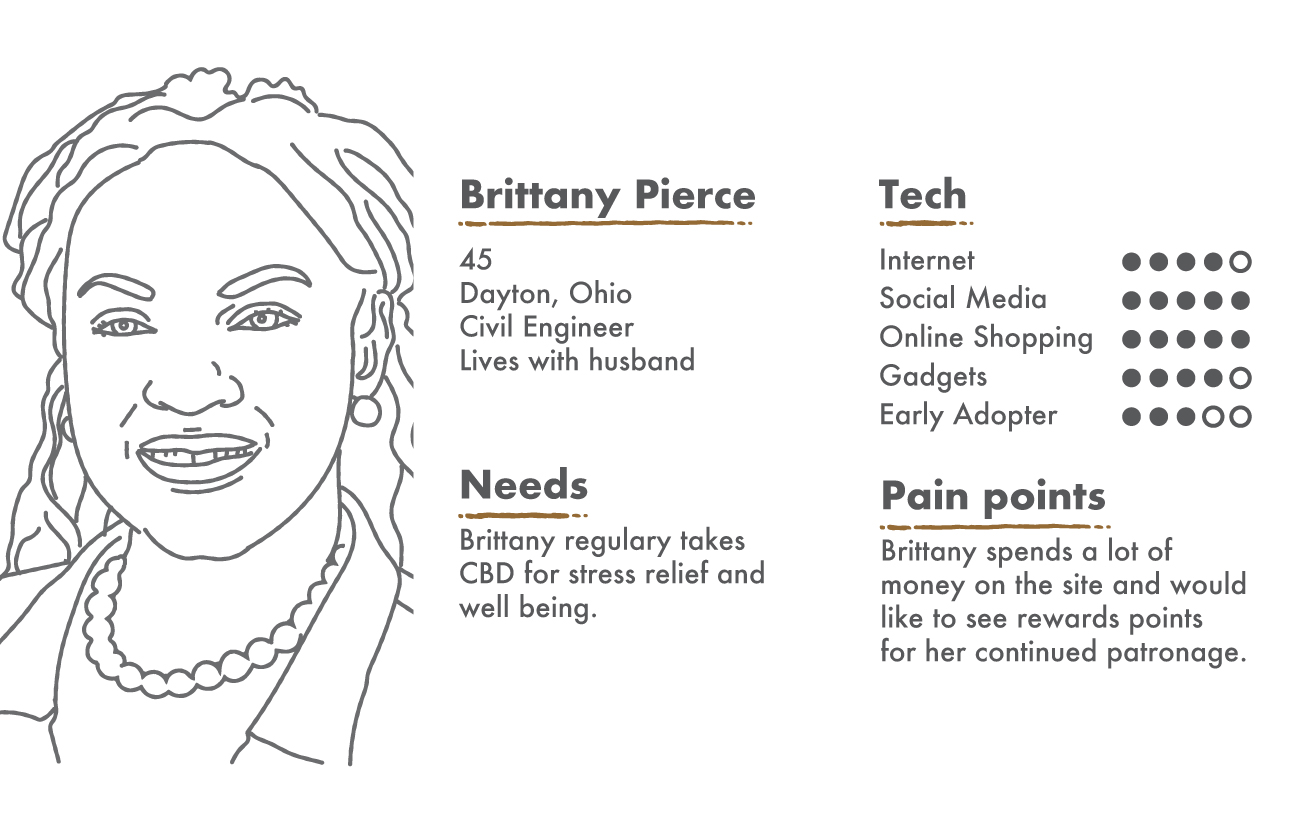
Brittany
"I want my rewards points."
A consistent, high-frequency buyer who gets nothing for her loyalty. She's not browsing — she knows what she wants and just needs the path to repeat purchase to be fast and frictionless.
FEATURE BUILT FOR HER
Loyalty Rewards Program
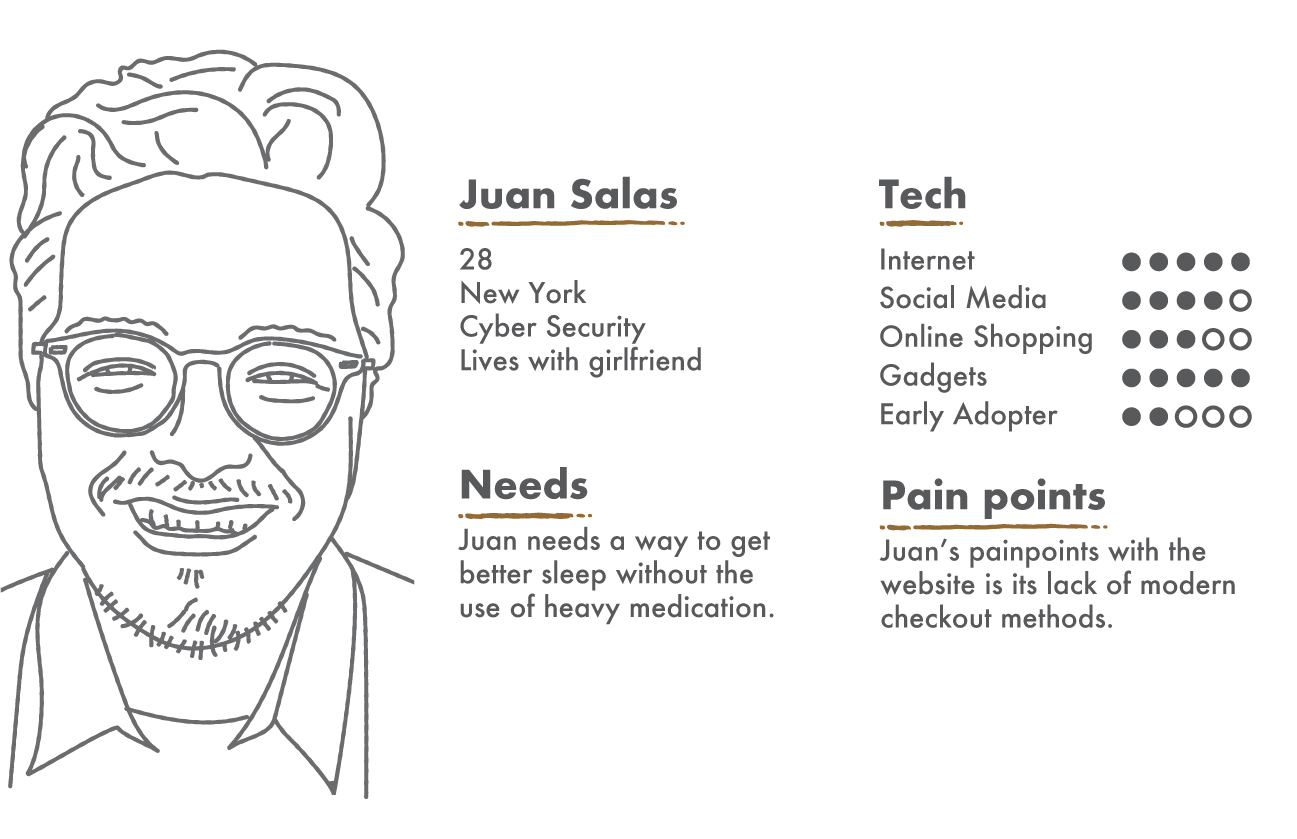
Juan
"What do other people think?"
New to CBD or cautious about quality. He gravitates toward reviews and social proof before committing. Flashy imagery doesn't move him, but 132 four-star reviews will.
FEATURE BUILT FOR HIM
Product Reviews Component
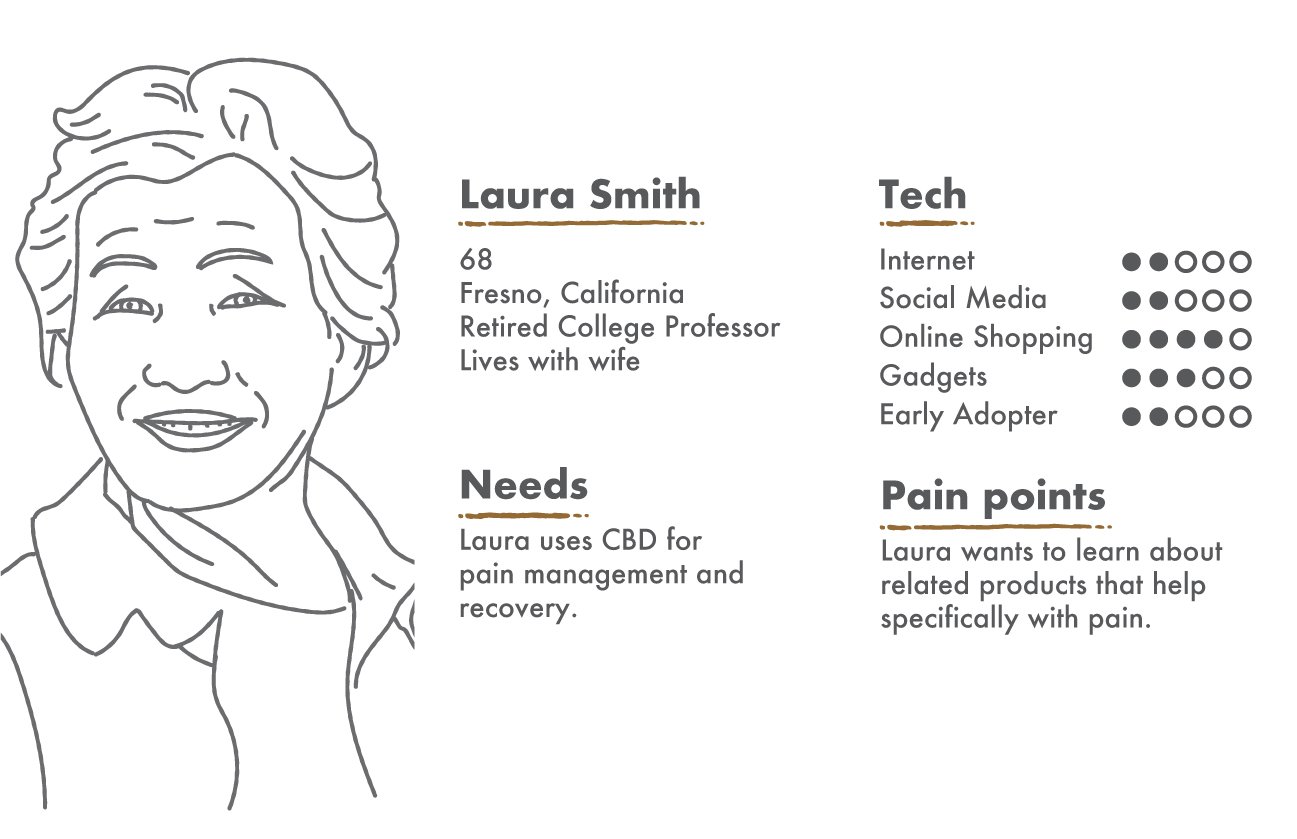
Laura
"What else helps with this?"
A category-loyal shopper using CBD for pain management. She's not interested in the full catalog — she wants to discover what else works for her specific need without having to go looking.
FEATURE BUILT FOR HER
Recommended Products Rail
Inoformation ARCHITECTURE - SITE MAP
Three users, three distinct goals
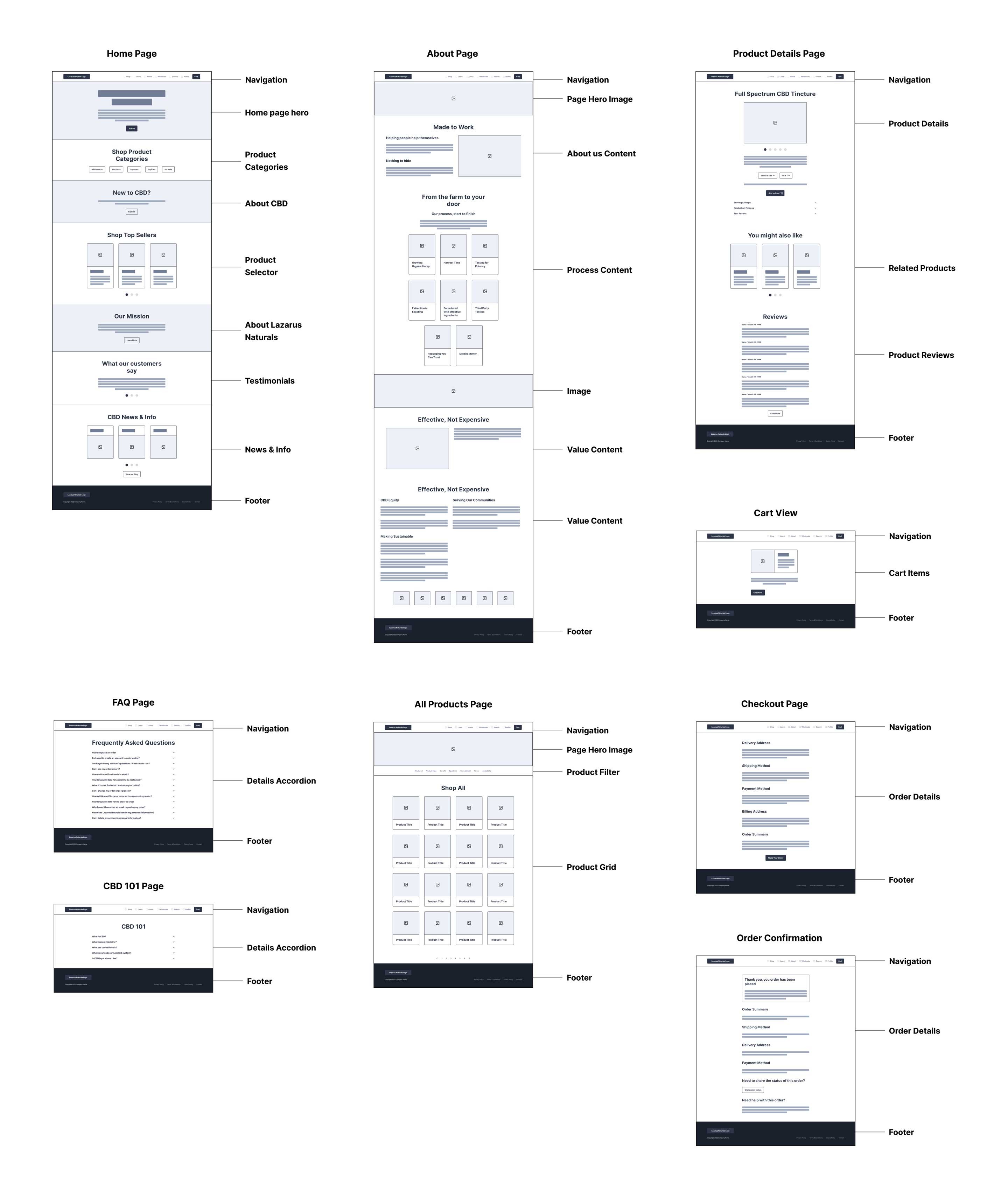
Navigation restructured around how users actually shop — by health benefit and by product type — rather than by internal catalog logic.
Key Design Decisions
Three changes that moved the numbers
1. Top Sellers on the Homepage
There was no way for a new visitor to quickly gauge what other customers trusted. I added a "Shop Top Sellers" component to the homepage and product listing pages, providing social proof at the moment of discovery — before users even reached a product detail page. This component became one of the highest-performing on the site and contributed directly to the 37% lift in related product sales.
2. "You Might Also Like" on the Product Page
Users like Laura weren't navigating back to the full catalog to find related products — they needed a contextual nudge at the point of decision. The recommendations rail surfaced products within the same health benefit category, keeping category-loyal shoppers engaged without pushing them into a browse experience they'd abandon.
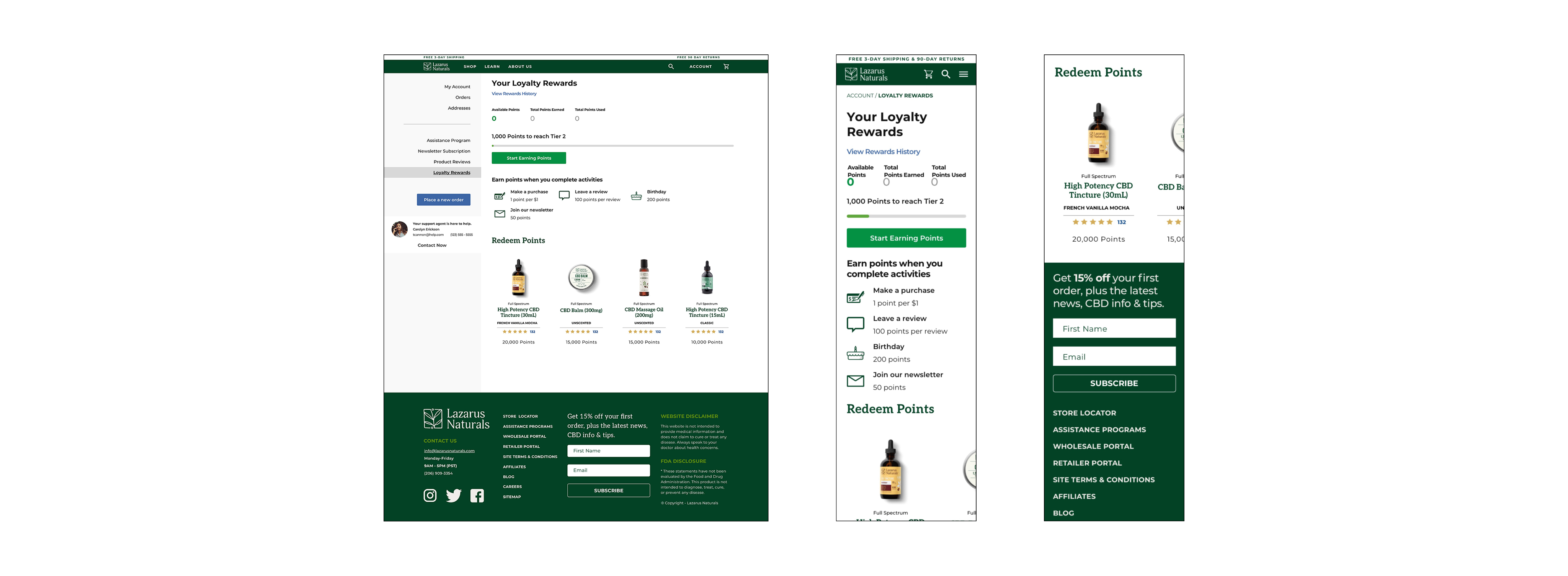
3. Loyalty Rewards Program
High-frequency buyers like Brittany had no reason to feel valued. I designed a tiered loyalty system where customers earn points on purchases, reviews, birthdays, and newsletter sign-ups. Within one quarter, over 2,000 repeat customers enrolled — a new retention lever the brand hadn't had before.
High-Fidelity Screens
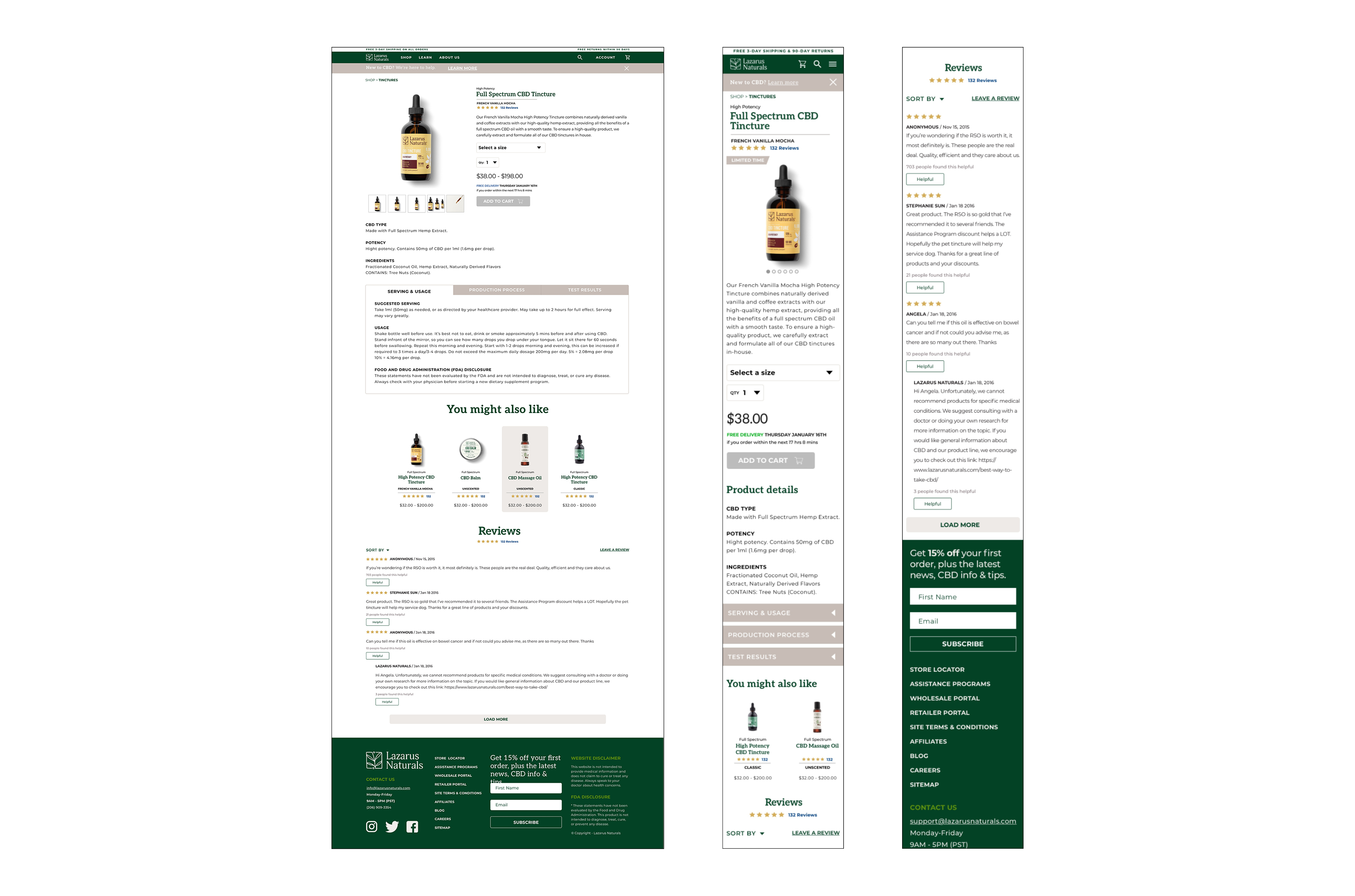
Home Page
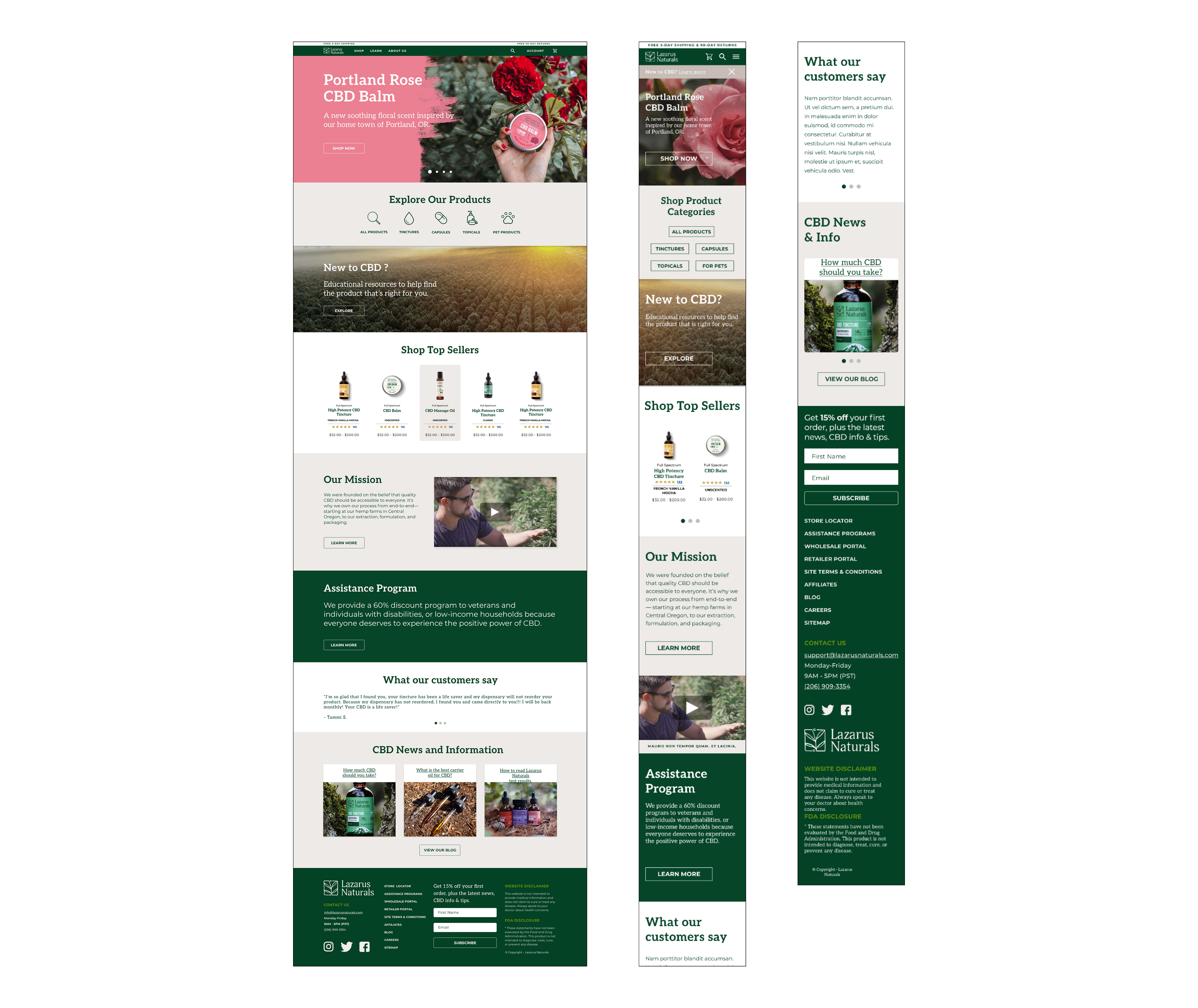
Shop Top Sellers Component
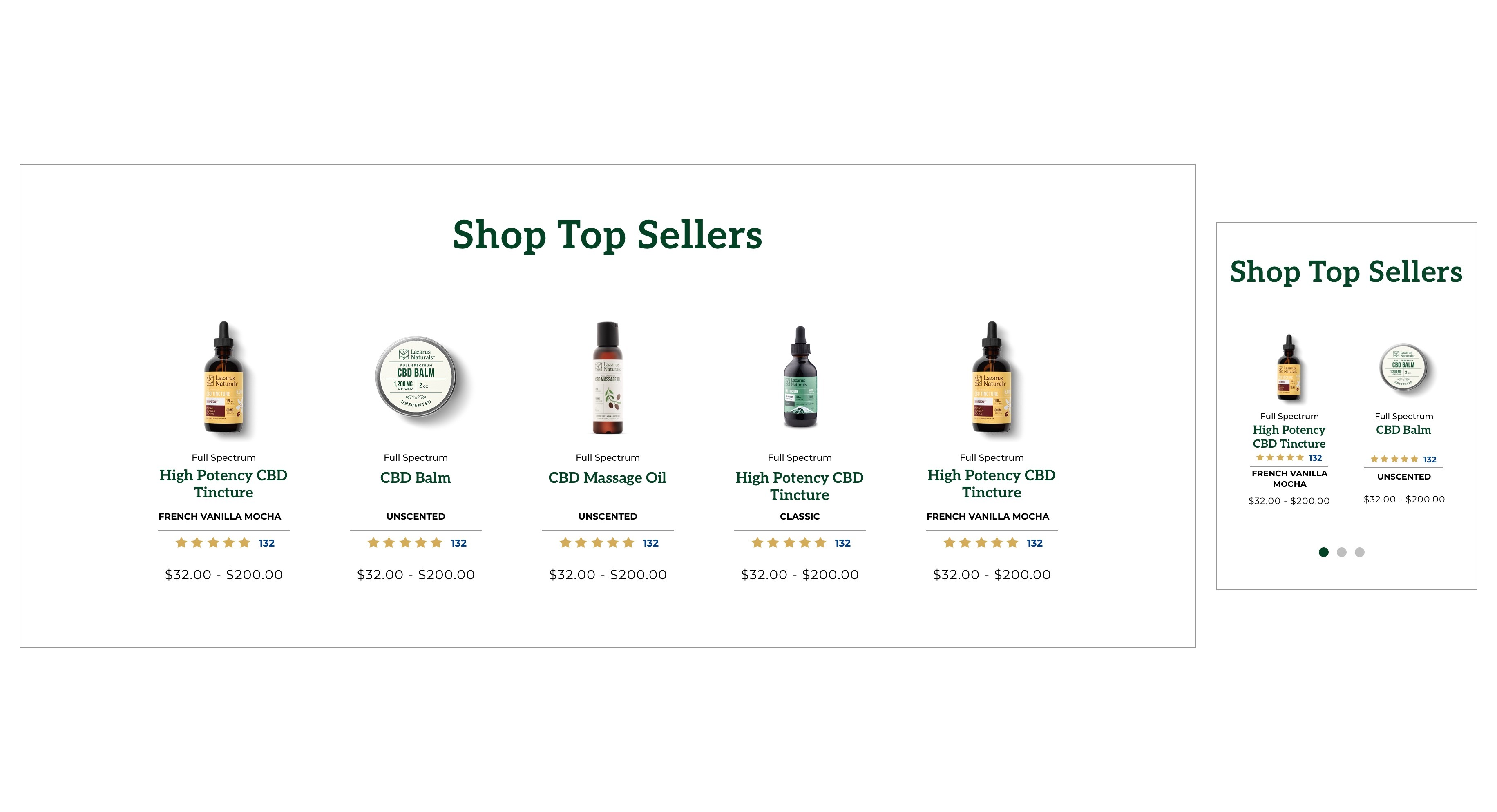
Product Details Page
Loyalty Rewards Page
A/B Test - Cart Page
The highest-impact change was the simplest one
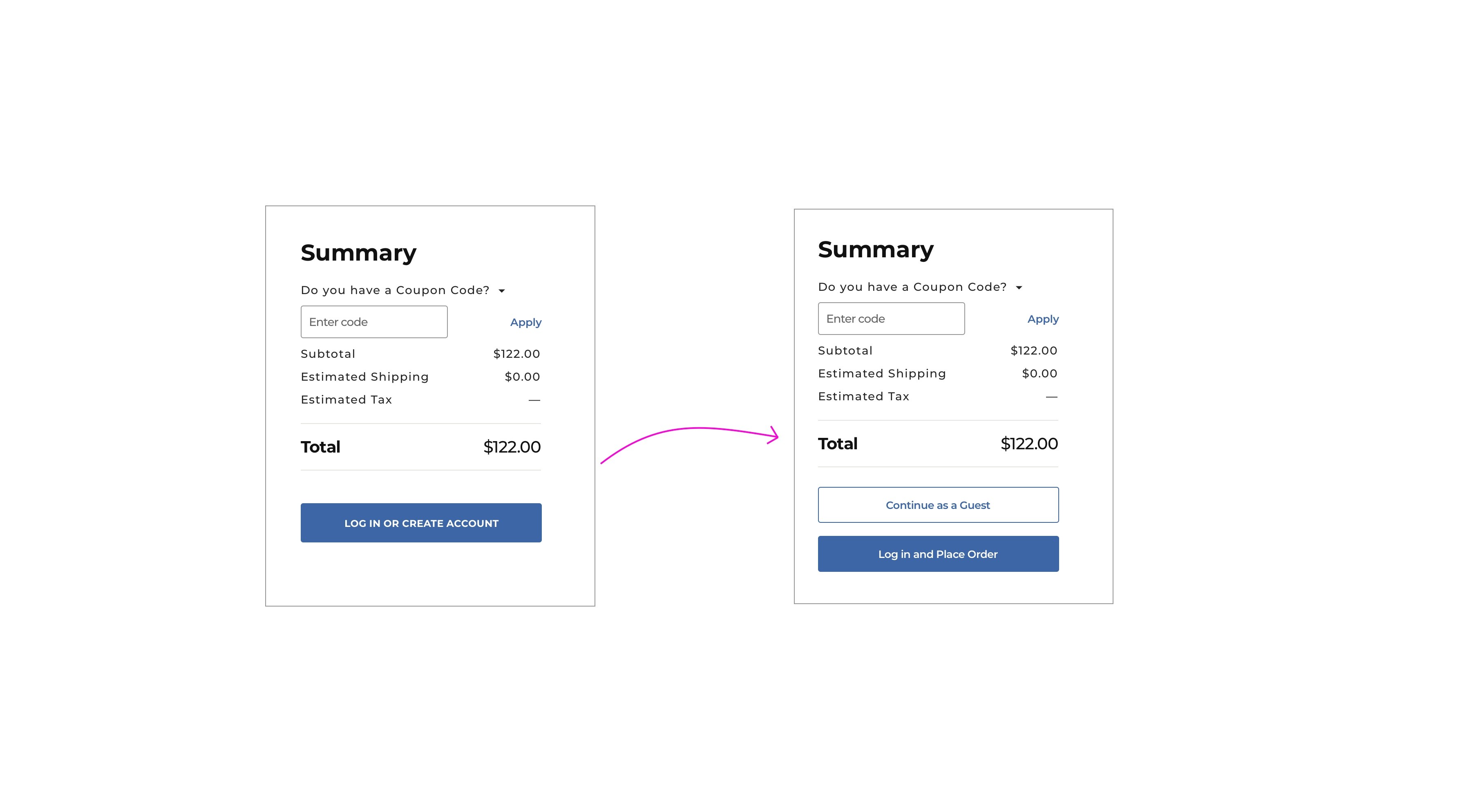
Google Analytics flagged a persistent drop-off spike at the cart page. The culprit: the only way to proceed was to log in or create an account. We ran a live A/B test — forced login versus adding a "Continue as Guest" option — and let users decide.
BEFORE: HIGHER DROP-OFF
Log In or Create Account only
Users without an account — or who didn't want to create one — had nowhere to go. Abandoned carts followed.
AFTER: WINNER
"Continue as Guest" added
Both paths visible. Users chose their own route. Completed purchases climbed, abandoned carts dropped.
Result:
The guest checkout variant reached statistical significance quickly. We deployed it confidently and saw an 8% conversion rate increase and an 11% drop in cart abandonment within the following quarter. One button. Measurable impact.
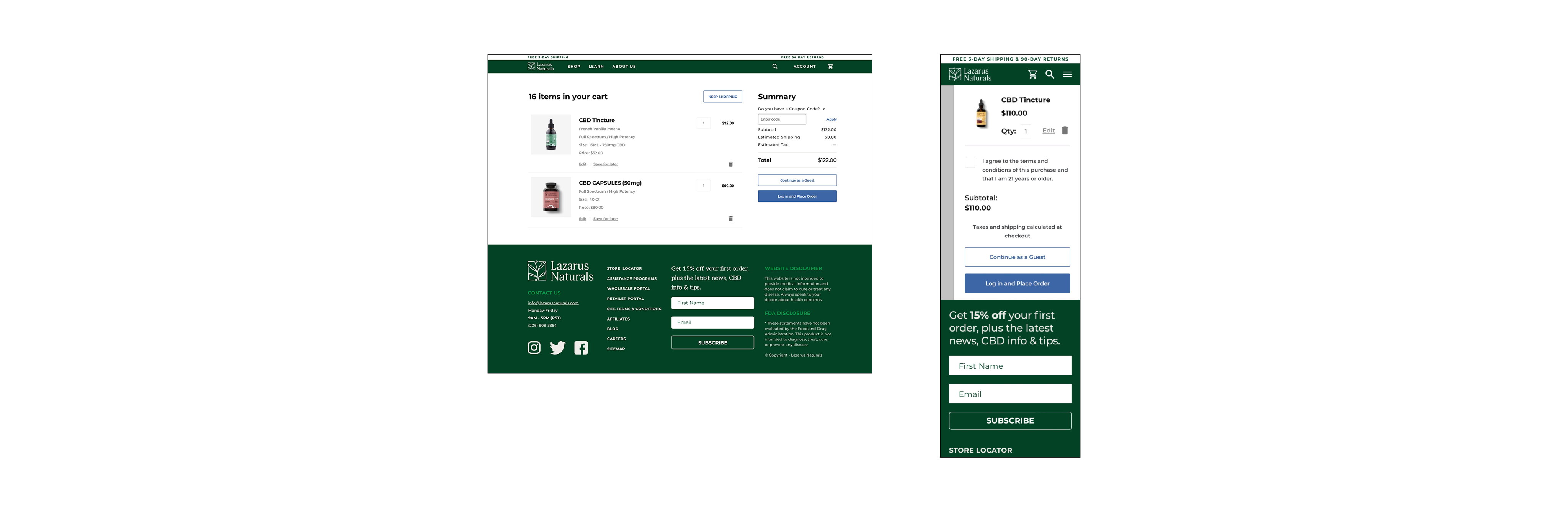
Checkout & Confirmation Flow
Cart Page
Checkout Page
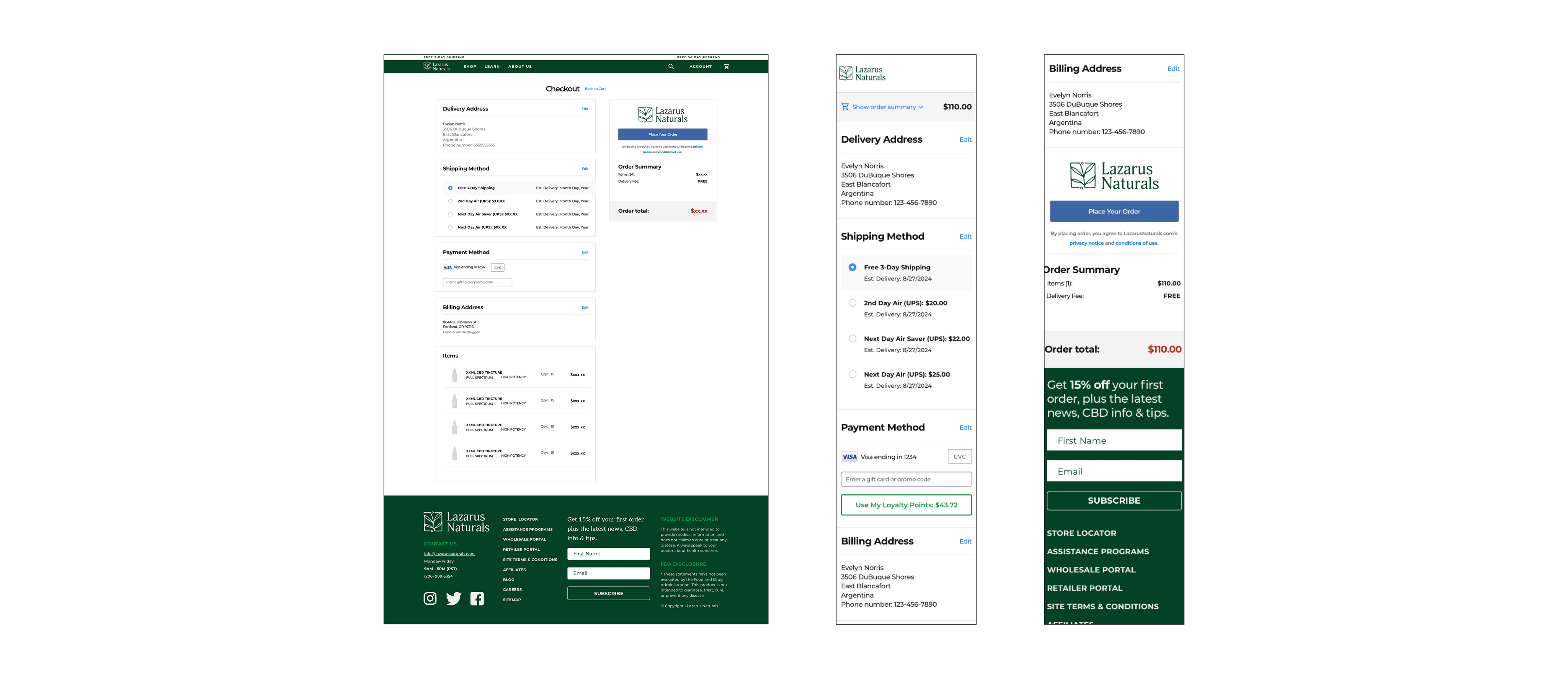
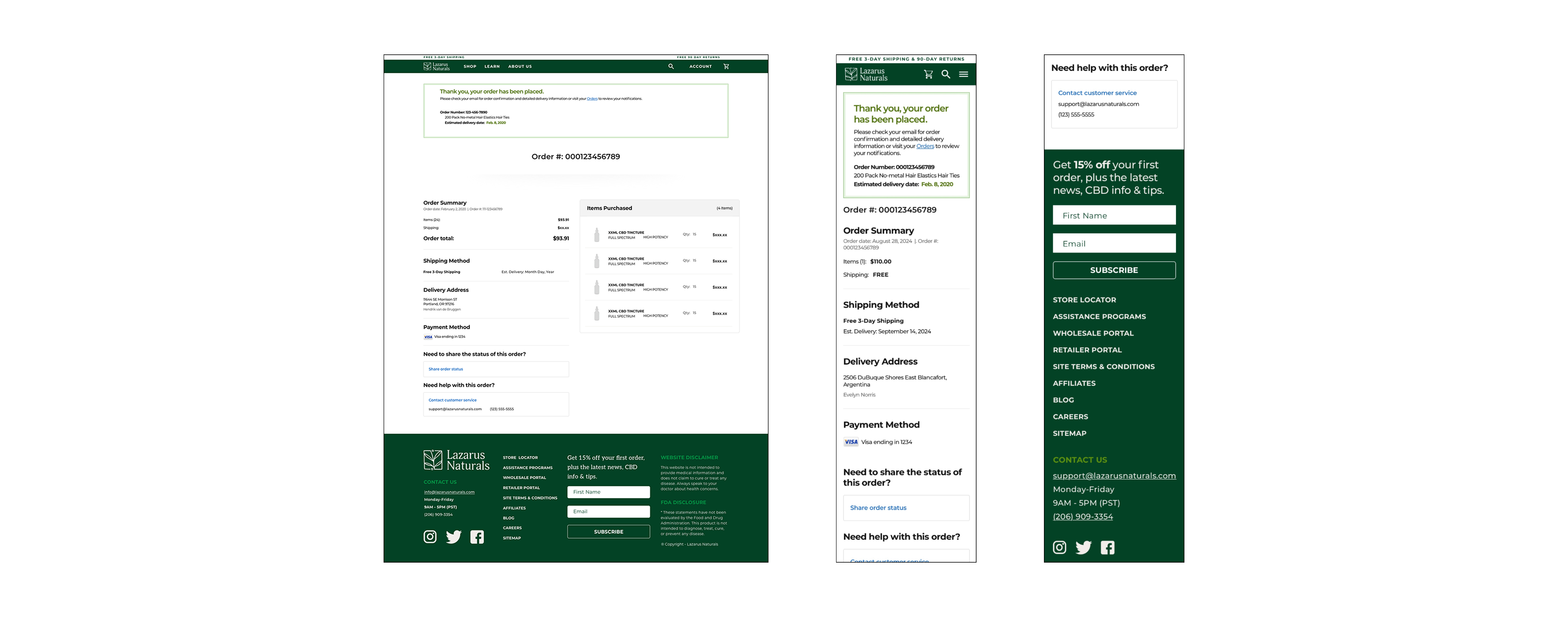
Order Confirmation
Design System
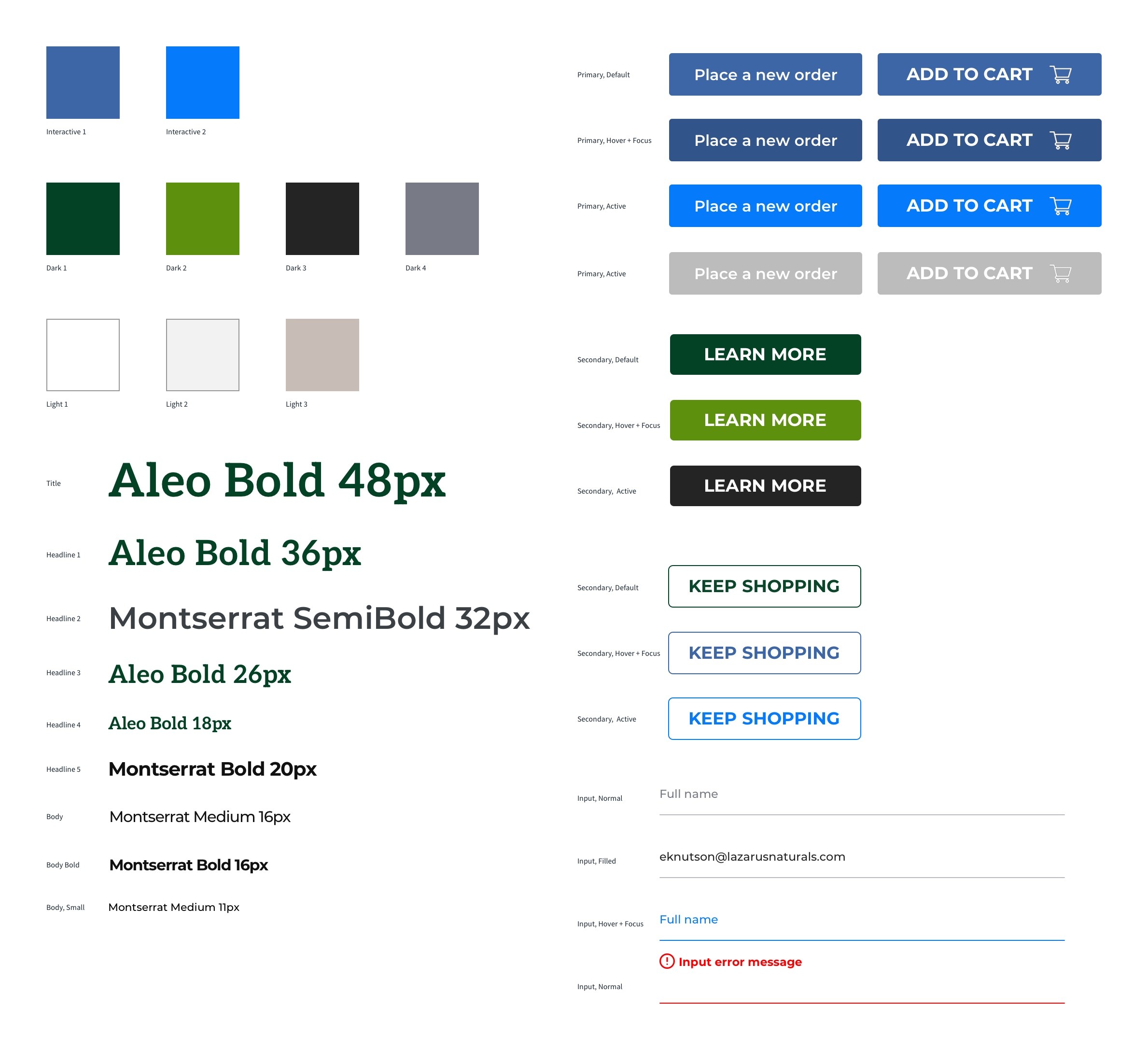
Reflection
What this project taught me about friction
The biggest lesson here wasn't about design — it was about assumptions. The forced-login flow had probably been there since the site launched, baked in under the assumption that account creation was good for retention. The data said otherwise.
Running a live A/B test and letting the results make the argument was more persuasive than any design rationale. It also meant the change shipped fast, because there was nothing left to debate.
When data and design speak the same language, decisions stop being opinions.
UX Case Study · 2020
Lazarus NaturalsE-Commerce Redesign
Reducing checkout friction, launching a loyalty program, and surfacing the right products to the right users — all measured, all shipped.
Results
Q4 2020 - Q1 2021
Scheduled tours in 2025 compaired to 22,543 scheduled in 2024
Decrease in drop off rate on card page
Increase in sales of recommended products components
Scheduled tours in 2025 compaired to 22,543 scheduled in 2024
Statistics captured Q4 2020 - Q1 2021
Background
An established brand with real friction in the funnel
Lazarus Naturals had a loyal customer base, a strong mission, and a growing product catalog. What they didn't have was a checkout experience that let customers actually complete purchases — or any mechanism to reward the people who kept coming back.
Google Analytics told the story clearly: cart drop-off was high, there was no loyalty program to retain repeat buyers, and product discovery was underserving customers who didn't already know what they wanted.
Reduce cart drop-off
Launch loyalty rewards
Surface recommended products
Increase product reviews
Three users, three distinct goals
Rather than designing for a single archetype, I identified three user modes that drove meaningfully different behavior on the site. Each persona mapped directly to a feature we prioritized and shipped.
Users
Brittany
"I want my rewards points."
A consistent, high-frequency buyer who gets nothing for her loyalty. She's not browsing — she knows what she wants and just needs the path to repeat purchase to be fast and frictionless.
FEATURE BUILT FOR HER
Loyalty Rewards Program
Juan
"What do other people think?"
New to CBD or cautious about quality. He gravitates toward reviews and social proof before committing. Flashy imagery doesn't move him, but 132 four-star reviews will.
FEATURE BUILT FOR HIM
Product Reviews Component
Laura
"What else helps with this?"
A category-loyal shopper using CBD for pain management. She's not interested in the full catalog — she wants to discover what else works for her specific need without having to go looking.
FEATURE BUILT FOR HER
Recommended Products Rail
Inoformation ARCHITECTURE - SITE MAP
Three users, three distinct goals
Navigation restructured around how users actually shop — by health benefit and by product type — rather than by internal catalog logic.
Key Design Decisions
Three changes that moved the numbers
1. Top Sellers on the Homepage
There was no way for a new visitor to quickly gauge what other customers trusted. I added a "Shop Top Sellers" component to the homepage and product listing pages, providing social proof at the moment of discovery — before users even reached a product detail page. This component became one of the highest-performing on the site and contributed directly to the 37% lift in related product sales.
2. "You Might Also Like" on the Product Page
Users like Laura weren't navigating back to the full catalog to find related products — they needed a contextual nudge at the point of decision. The recommendations rail surfaced products within the same health benefit category, keeping category-loyal shoppers engaged without pushing them into a browse experience they'd abandon.
3. Loyalty Rewards Program
High-frequency buyers like Brittany had no reason to feel valued. I designed a tiered loyalty system where customers earn points on purchases, reviews, birthdays, and newsletter sign-ups. Within one quarter, over 2,000 repeat customers enrolled — a new retention lever the brand hadn't had before.
High-Fidelity Screens
Home Page
Shop Top Sellers Component
Product Details Page
Loyalty Rewards Page
A/B Test - Cart Page
The highest-impact change was the simplest one
Google Analytics flagged a persistent drop-off spike at the cart page. The culprit: the only way to proceed was to log in or create an account. We ran a live A/B test — forced login versus adding a "Continue as Guest" option — and let users decide.
BEFORE: HIGHER DROP-OFF
Log In or Create Account only
Users without an account — or who didn't want to create one — had nowhere to go. Abandoned carts followed.
AFTER: WINNER
"Continue as Guest" added
Both paths visible. Users chose their own route. Completed purchases climbed, abandoned carts dropped.
Result:
The guest checkout variant reached statistical significance quickly. We deployed it confidently and saw an 8% conversion rate increase and an 11% drop in cart abandonment within the following quarter. One button. Measurable impact.
Checkout & Confirmation Flow
Cart Page
Checkout Page
Order Confirmation
Design System
Reflection
What this project taught me about friction
The biggest lesson here wasn't about design — it was about assumptions. The forced-login flow had probably been there since the site launched, baked in under the assumption that account creation was good for retention. The data said otherwise.
Running a live A/B test and letting the results make the argument was more persuasive than any design rationale. It also meant the change shipped fast, because there was nothing left to debate.
When data and design speak the same language, decisions stop being opinions.
UX Case Study · 2020
Lazarus NaturalsE-Commerce Redesign
Reducing checkout friction, launching a loyalty program, and surfacing the right products to the right users — all measured, all shipped.
Results
Q4 2020 - Q1 2021
Conversion rate increase
Decrease in drop off rate on card page
Increase in sales of recommended products components
Repeat customers signed up for loyalty rewards points
Statistics captured Q4 2020 - Q1 2021
Background
An established brand with real friction in the funnel
Lazarus Naturals had a loyal customer base, a strong mission, and a growing product catalog. What they didn't have was a checkout experience that let customers actually complete purchases — or any mechanism to reward the people who kept coming back.
Google Analytics told the story clearly: cart drop-off was high, there was no loyalty program to retain repeat buyers, and product discovery was underserving customers who didn't already know what they wanted.
Reduce cart drop-off
Launch loyalty rewards
Surface recommended products
Increase product reviews
Users
Three users, three distinct goals
Rather than designing for a single archetype, I identified three user modes that drove meaningfully different behavior on the site. Each persona mapped directly to a feature we prioritized and shipped.
Brittany
"I want my rewards points."
A consistent, high-frequency buyer who gets nothing for her loyalty. She's not browsing — she knows what she wants and just needs the path to repeat purchase to be fast and frictionless.
FEATURE BUILT FOR HER
Loyalty Rewards Program
Juan
"What do other people think?"
New to CBD or cautious about quality. He gravitates toward reviews and social proof before committing. Flashy imagery doesn't move him, but 132 four-star reviews will.
FEATURE BUILT FOR HIM
Product Reviews Component
Laura
"What else helps with this?"
A category-loyal shopper using CBD for pain management. She's not interested in the full catalog — she wants to discover what else works for her specific need without having to go looking.
FEATURE BUILT FOR HER
Recommended Products Rail
Information Architecture - Site map
Three users, three distinct goals
Navigation restructured around how users actually shop — by health benefit and by product type — rather than by internal catalog logic.
Key Design Decisions
Three changes that moved the numbers
1. Top Sellers on the Homepage
There was no way for a new visitor to quickly gauge what other customers trusted. I added a "Shop Top Sellers" component to the homepage and product listing pages, providing social proof at the moment of discovery — before users even reached a product detail page. This component became one of the highest-performing on the site and contributed directly to the 37% lift in related product sales.
2. "You Might Also Like" on the Product Page
Users like Laura weren't navigating back to the full catalog to find related products — they needed a contextual nudge at the point of decision. The recommendations rail surfaced products within the same health benefit category, keeping category-loyal shoppers engaged without pushing them into a browse experience they'd abandon.
3. Loyalty Rewards Program
High-frequency buyers like Brittany had no reason to feel valued. I designed a tiered loyalty system where customers earn points on purchases, reviews, birthdays, and newsletter sign-ups. Within one quarter, over 2,000 repeat customers enrolled — a new retention lever the brand hadn't had before.
High-Fidelity Screens
Home Page
Shop Top Sellers Component
Product Details Page
Loyalty Rewards Page
A/B Test - Cart Page
The highest-impact change was the simplest one
Google Analytics flagged a persistent drop-off spike at the cart page. The culprit: the only way to proceed was to log in or create an account. We ran a live A/B test — forced login versus adding a "Continue as Guest" option — and let users decide.
BEFORE: HIGHER DROP-OFF
Log In or Create Account only
Users without an account — or who didn't want to create one — had nowhere to go. Abandoned carts followed.
AFTER: WINNER
"Continue as Guest" added
Both paths visible. Users chose their own route. Completed purchases climbed, abandoned carts dropped.
Result:
The guest checkout variant reached statistical significance quickly. We deployed it confidently and saw an 8% conversion rate increase and an 11% drop in cart abandonment within the following quarter. One button. Measurable impact.
Checkout & Confirmation Flow
Cart Page
Checkout Page
Order Confirmation
Design System
Reflection
What this project taught me about friction
The biggest lesson here wasn't about design — it was about assumptions. The forced-login flow had probably been there since the site launched, baked in under the assumption that account creation was good for retention. The data said otherwise.
Running a live A/B test and letting the results make the argument was more persuasive than any design rationale. It also meant the change shipped fast, because there was nothing left to debate.
When data and design speak the same language, decisions stop being opinions.